



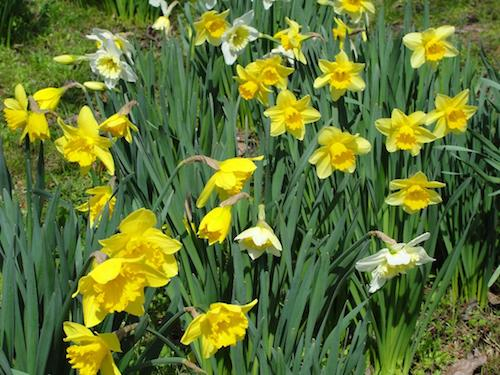
Daffodils need a full season of last year’s foliage to produce this year’s blooms.
March 5, 2026 - Every spring in East Texas, about the time the daffodils, narcissus, and jonquils finish their show, gardeners start getting the itch to tidy things up. The blooms fade, the leaves begin to flop, and those once‑cheerful clumps suddenly look a little faded. It’s tempting to reach for the pruners. But if you want a strong display next spring, the best thing you can do right now is nothing at all.
Spring bulbs live by a simple rule: bloom, grow, recharge, rest. Once the flowers fade, the foliage becomes the plant’s power plant. Those green leaves are busy capturing sunlight and converting it into carbohydrates that are stored down in the bulb. That stored energy is what fuels next year’s blooms. Cut the foliage too early, and you’re cutting short the plant’s ability to rebloom next year.
Here in East Texas, our mild winter and pleasant spring gives bulbs just the right amount of time to rebuild themselves. The leaves keep photosynthesizing for months after the flowers are gone. During this period, next year’s flower buds are being formed inside the bulb. If you remove the foliage prematurely, you may not notice the consequences right away, but you’ll certainly notice next spring when the bloom count drops or the flowers don’t appear at all.
So, when is it safe to clean things up? A simple rule works beautifully for our region: don’t cut your daffodil foliage until after Mother’s Day, certainly by Memorial Day. By mid‑May, the leaves have usually yellowed, softened, and begun to collapse naturally. That’s your signal that the plant has finished its work and the bulb has stored all the energy it can. At that point, you can tidy up without sacrificing next year’s show.
Now, about those “creative” attempts to neaten things up by tying the foliage in knots, braiding it, or wrapping rubber bands around the leaves. You still see this from time to time, and it’s always done with good intentions. Unfortunately, it works against the plant. When you fold, twist, or bind the leaves, you reduce the surface area exposed to sunlight. Less sunlight means less energy stored, and less energy stored means fewer blooms next year. Let the foliage ripen naturally, even if it looks a little unkempt for a few months.
If the fading leaves bother you, there are better ways to disguise them. Plant daffodils among warm perennials like daylilies, salvias, or rose mallow hibiscus. As those plants leaf out, they’ll help hide the declining bulb foliage. Cool season annuals such as petunias, bluebonnets, and verbena also do a fine job of filling the space while the bulbs finish their cycle.
Daffodils, narcissus, and jonquils are some of the most dependable and long-lived spring performers we have in East Texas. They tolerate our soils, shrug off late cold snaps, and return year after year with very little fuss. All they ask is a few months of patience after the blooms fade. Give them that time, and they’ll reward you with a dependable spring display worth waiting for.