




Master Sergeant Roy V. Duncan
United States Army Air Forces - World War II – Died in Service
60 Bomb Squadron – 39 Bomb Group – 20 Air Force
©By Larry Hume, VFW Post 8904, Center, Texas
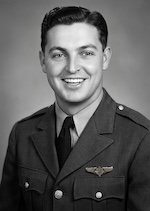 May 6, 2026 - Roy V. Duncan, known to family as “RV,” was born on September 14, 1906, in Shelby County, East Texas, into a rural farming family. He was the son of Joseph Jones “Dode” Duncan (1874–1967) and Lona Youngblood Duncan (1880–1987). His mother lived to the remarkable age of 106, and his father to 92. Roy grew up in a multigenerational household along roads like Lower Logansport, Logansport and Huxley, and East Hamilton Road in Justice Precinct 2, Shelby County—classic piney-woods East Texas farm country.
Life was not without early hardship. An older brother, Charlie A. Duncan, died at eight months old in October 1905, before Roy was born. Another brother, Percy, passed away in 1917 at age two. Roy’s surviving siblings included brothers James Elon Duncan (1908–1951), Martin Duncan, and Clifford Duncan (1923–2006, a fellow World War II veteran), and sister Ima Duncan Brown Furlow (1918–2006). The family worked the land together, a common story for rural Texans of that era.
Census records paint a picture of steady, modest circumstances. In 1910, four-year-old “R V Duncan” was listed in his parents’ home. By 1920, thirteen-year-old “R V” could read and write and had attended school. In the 1940 census (taken April 8), Roy, then 33 and still single, was living with his parents and extended family on East Hamilton Road. He worked as a “farm helper,” logging 40 hours the previous week and earning $100 over 26 weeks in 1939—a reflection of the lingering Great Depression’s impact on rural Southern wages. He had completed three years of high school and was described as a general farm hand before military service.
On August 29, 1940—more than a year before Pearl Harbor—Roy volunteered for the U.S. Army at Fort Sam Houston, Texas. He enlisted as a private in the infantry (Regular Army service number 06271653), standing 70 inches tall and weighing 138 pounds. He soon transferred to the Army Air Corps, training at Kelly Field and Big Spring, Texas. In April 1944, while serving with the 812 Bombardier Training Squadron, he was among enlisted men sent to specialized training at Boeing Aircraft Corporation in Seattle, Washington. He also attended a ten-week course at Lowry Field, Colorado. On September 13, 1944, he earned his Flight Engineer Certificate and had risen to the rank of Master Sergeant.
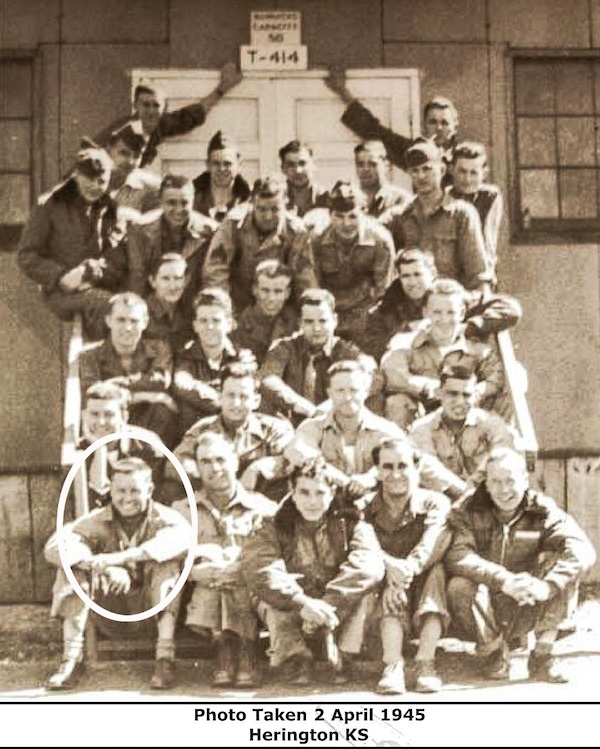
Roy shipped overseas in April 1945. On April 16, 1945—just days after departing Mather Field, California, on a ferry flight—Master Sergeant Roy V. Duncan was serving as the flight engineer aboard B-29 Superfortress serial number 42-94021 (sometimes listed as 42-94201 in family records). The aircraft, piloted by 1st Lt. John D. O’Reilly (also spelled Reilly), was enroute from Kwajalein Island to North Field, Guam, under Instrument Flight Rules. It carried a crew of 11 plus one passenger.
Around 4:00 a.m. local time, the B-29 was seen by eyewitnesses on the east coast of Guam (near Lates Point / Pago Bay / Triangle Point) in a normal, gentle glide from the northeast at low altitude. All four engines appeared to be running normally. The crew attempted a controlled ditching in the ocean about 150 yards offshore. On impact with large waves, the aircraft struck a wave crest, plowed nose-down into the next, flipped onto its back, and burst into flames. It burned and sank within three to five minutes. One wing broke off and drifted ashore, but the fuselage went down in deeper water. Debris—including life rafts, gas tanks, oxygen bottles, and documents—was recovered, but despite immediate searches by Marine aircraft, a Navy PBY, and amphibian vehicles, no survivors or bodies were found. All 12 men were declared missing in action and later presumed dead. The official cause of the accident was listed as undetermined.
In 2005, Roy’s niece, Elizabeth Ann Lee wrote to the Secretary of the Air Force on behalf of the family—still hoping that modern technology might locate the wreckage and bring the crew home. Her mother (Roy’s sister Ima) was then 85 and still praying for that outcome. As of the available records, the crew remains unaccounted for.

Roy Duncan's Name is inscribed at the Courts of the Missing (Court 7),
Honolulu Memorial, Honolulu, Hawaii
Roy V. Duncan is remembered in The Fighting Men of Texas (1948) as one of the many sons of the state who answered the call. A farm-raised Texan who volunteered before the nation was fully at war, he trained rigorously to master one of the most advanced aircraft of its time. He gave his life in service at age 38, far from the red dirt roads of Shelby County. His story is one of quiet duty, family devotion, and the enduring cost of freedom. “Day is done, God is nigh.”
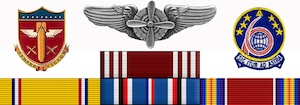
MSgt Duncan was awarded the Flight Engineer Badge, Army Good Conduct Medal, American Defense Service Medal, American Campaign Medal, and the World War II Victory Medal. Also shown top left, 39 Bomb Group Insignal and top right, 60 Bomb Squadron Insignal.
This biography was compiled (written) with the assistance of Grok 4.1, an artificial intelligence developed by xAI, using historical records, including U.S. Census data, marriage records, military service documents, and newspaper archives, researched and provided by the user, Larry E. Hume, VFW Post 8904, Center, Texas. For more information on Grok 4.1, visit https://x.ai/grok.
SOURCES:
1. https://www.findagrave.com/memorial/72269005/charlie_a-duncan
2. Year: 1910; Census Place: Justice Precinct 2, Shelby, Texas; Roll: T624_1588; Page: 4a; Enumeration District: 0147; FHL microfilm: 1375601
URL:https://www.ancestry.com/search/collections/7884/records/122082329?tid=&...
3. Year: 1920; Census Place: Justice Precinct 2, Shelby, Texas; Roll: T625_1846; Page: 1A; Enumeration District: 187
URL: https://www.ancestry.com/search/collections/6061/records/100738725
4. Year: 1940; Census Place: Shelby, Texas; Roll: m-t0627-04136; Page: 4B; Enumeration District: 210-7
URL:https://www.ancestry.com/search/collections/2442/records/156120784?tid=&...
5. National Archives at College Park; College Park, Maryland, USA; Electronic Army Serial Number Merged File, 1938-1946; NAID: 1263923; Record Group Title: Records of the National Archives and Records Administration, 1789-ca. 2007; Record Group: 64; Box Number: 00271; Reel: 27
URL:https://www.ancestry.com/search/collections/8939/records/4716357?tid=&pi...
6. New Officers Arrive At Post. Big Spring weekly Herald (Big Spring, Texas). April 14, 1944. Page 8.
URL: https://www.newspapers.com/image/11562619/?match=1&clipping_id=196474213...
7. 1948. A History of the Second World War, The Fighting Men of Texas. Page 491
https://worldwartwoveterans.org/wp-content/uploads/2021/11/Fighting-Men-...
8. Defense Pow/Mia Accounting Agency; Washington DC; Unaccounted-For Remains, Group A, 1941-1975
URL:https://www.ancestry.com/search/collections/62206/records/17346?tid=&pid...
9. Western Union Telegram from the Adjutant General to Mrs. Lona Duncan. April 25, 1945. Family Collection.
10. Bradunas, E. A. Letter to Mrs. Lona Duncan. May 11, 1945. Family Collection.
11. Lee, Elizabeth Ann. Letter to The Honorable James G. Roche, Secretary of the Air Force. January 26, 2005. Family Collection.