



SFA University
May 27, 2020 - Every year, seniors in Stephen F. Austin State University’s interior design program take their final projects on the road to major Texas cities to receive feedback and obtain job leads.
Their travel was canceled this year because of COVID-19.
Like other designers around the country, the students decided to move their work online to showcase how they create beautiful spaces while focusing on safety, economy and utility.
The SFA senior interior design student website organizes the seniors by the cities they’re hoping to work in — Austin, Dallas and Houston — and presents their portfolios and résumés for potential employers to explore.
Jennifer Luque, adjunct professor of interior design in SFA’s School of Human Sciences, helped create the website and taught the seniors’ portfolio course during the spring semester.
“This is the next best thing to exhibiting in person,” Luque said. “What some have interpreted as a challenge, we have taken as an opportunity.”
She sent the website’s URL to the International Interior Design Association Texas/Oklahoma Chapter and the American Society of Interior Designers Texas Gulf Coast Chapter. Those organizations have agreed to share the website with their members, including thousands of interior designers, firms and industry professionals, according to Luque.
“In some ways, the students are receiving more exposure and a chance to share their graduate portfolios with individuals across the region,” she said.
Luque added that one student was hired just by sharing the site with friends, family members and firms asking SFA about recent interior design graduates.
Trekeva Cotledge of Whitehouse and Madison McDaniel of Mount Pleasant are two of the nearly dozen students featured on the website.
Cotledge’s portion of the website includes her designs for furniture, a condo and a long-term care facility.
“I aim to give back to the community and help clients’ dreams come true through strategy and dedication,” she said.
Cotledge hopes to obtain a second degree in architecture and start her own business.
McDaniel’s volunteer work refurbishing furniture for the “Chairished Blessings” fundraiser and designing bath houses for the homeless for Love In the Name of Christ, an organization in Nacogdoches committed to transforming lives, informs her design philosophy.
“A good designer needs to be able to see and create beautiful, functional spaces,” she said.
Her portion of the site features both residential and retail designs.
For more information on these future designers’ work, visit the SFA senior interior design student website at https://sfasuinteriordesign.wixsite.com/sfasu-2020portfolios. For more information on SFA’s interior design program, contact program coordinator Leisha Bridwell at (936) 468-2371, or lbridwell@sfasu.edu.
Their travel was canceled this year because of COVID-19.
Like other designers around the country, the students decided to move their work online to showcase how they create beautiful spaces while focusing on safety, economy and utility.
The SFA senior interior design student website organizes the seniors by the cities they’re hoping to work in — Austin, Dallas and Houston — and presents their portfolios and résumés for potential employers to explore.
Jennifer Luque, adjunct professor of interior design in SFA’s School of Human Sciences, helped create the website and taught the seniors’ portfolio course during the spring semester.
“This is the next best thing to exhibiting in person,” Luque said. “What some have interpreted as a challenge, we have taken as an opportunity.”
She sent the website’s URL to the International Interior Design Association Texas/Oklahoma Chapter and the American Society of Interior Designers Texas Gulf Coast Chapter. Those organizations have agreed to share the website with their members, including thousands of interior designers, firms and industry professionals, according to Luque.
“In some ways, the students are receiving more exposure and a chance to share their graduate portfolios with individuals across the region,” she said.
Luque added that one student was hired just by sharing the site with friends, family members and firms asking SFA about recent interior design graduates.
Trekeva Cotledge of Whitehouse and Madison McDaniel of Mount Pleasant are two of the nearly dozen students featured on the website.
Cotledge’s portion of the website includes her designs for furniture, a condo and a long-term care facility.
“I aim to give back to the community and help clients’ dreams come true through strategy and dedication,” she said.
Cotledge hopes to obtain a second degree in architecture and start her own business.
McDaniel’s volunteer work refurbishing furniture for the “Chairished Blessings” fundraiser and designing bath houses for the homeless for Love In the Name of Christ, an organization in Nacogdoches committed to transforming lives, informs her design philosophy.
“A good designer needs to be able to see and create beautiful, functional spaces,” she said.
Her portion of the site features both residential and retail designs.
For more information on these future designers’ work, visit the SFA senior interior design student website at https://sfasuinteriordesign.wixsite.com/sfasu-2020portfolios. For more information on SFA’s interior design program, contact program coordinator Leisha Bridwell at (936) 468-2371, or lbridwell@sfasu.edu.
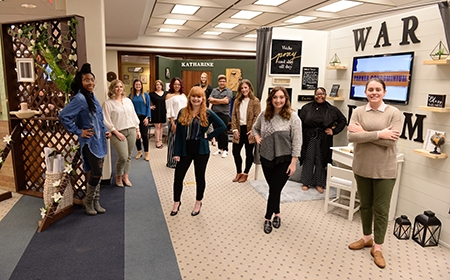
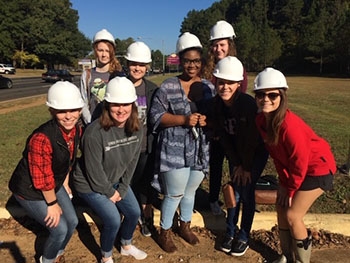
Stephen F. Austin State University, Interior Design Seniors (Photo by Hardy Meredith)
May 26, 2020 - As students across the nation adjust to the altered academic landscape, students at Stephen F. Austin State University are preparing to attend a virtual commencement May 30, which is designed to celebrate their achievements in spite of the challenges faced this semester due to the impact of COVID-19.
Through a series of videos, students will have access to the commencement address by SFA alumnus Michael Calbert, chairman of the board of Dollar General; and addresses by SFA President Dr. Scott Gordon; Dr. Steve Bullard, provost and vice president for academic affairs; and Craig Turnage, executive director of alumni relations, as well as a version of the school song created with video clips submitted by many of the graduating students.

Calbert, a 1984 SFA accounting graduate and East Texas native, worked as an auditor at Arthur Andersen and later joined U.S.-based private equity firm Kohlberg Kravis Roberts and Co. before retiring in 2014. In addition to Dollar General, he also serves on other corporate boards.
SFA graduate Annemarie Price said she plans to celebrate the day with a personal touch. Price, a marketing major from Katy, will have two very special guests in attendance — her dogs Astro and Travis dressed for the occasion in suits and ties — as she accepts her diploma at home from her parents. While it’s not exactly the celebration she had planned with friends from around the state gathered at Johnson Coliseum to watch her walk the stage, it’s enough for now.
“When I found out graduations were being canceled, it was important for me to redirect my focus on what I could control, what was truly important and what I could look forward to during this crisis,” Price said. “The class of 2020 won’t get the typical walk across the stage right now, but we will each have a unique celebration, which we will not easily forget.”
Other students are planning on simple celebrations with immediate family.
“My plan for graduation is to dress in a cap and gown and walk across my house as if it were a stage,” said Rachel Ballback, health science major from The Woodlands, who was named Miss SFA in March. “Even though I imagined the day to be much different, I am grateful SFA is offering an alternative.”
Price offered congratulations to her fellow graduates for persevering through an unprecedented situation.
“You have adapted and overcome in unexpected and unpredictable circumstances,” she said. “You should be proud of what you have accomplished.”
Degrees to be awarded include 1,188 bachelor’s, 294 master’s and two doctoral degrees. More than 468 students will graduate with honors, including 155 cum laude, 152 magna cum laude and 152 summa cum laude. Seventy-nine will graduate with the university scholar designation.
The ceremony will be available to view beginning at 6 a.m. May 30 at sfasu.edu/commencement.
May 20, 2020 - Jordan Stanford, a sophomore agricultural development major at Stephen F. Austin State University, was recently selected as one of 14 university students from across the U.S. to serve as a 2020-21 National Teach Ag ambassador.
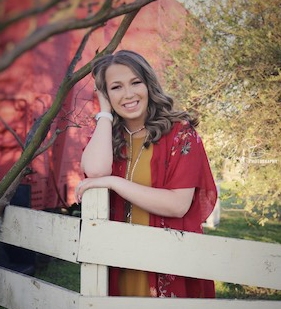
“I have always felt called to agricultural education,” Stanford said. “To help others find their calling in this amazing career is something I look forward to as a part of this program.”
Stanford serves as a student representative on the Teach Ag Texas Committee. The national ambassadors begin training this summer and will later be tasked with engaging students visiting the Teach Ag booth at the 93rd National FFA Convention this October in Indianapolis, Indiana. They also will host similar booths and workshops in their own states to promote the need for high-quality, diverse agriculture teachers.
The National Teach Ag Ambassador Program was developed in an effort to address the current, nationwide high demand for agriculture teachers in the U.S. This need is the result of retirements, current program growth, new programs opening, as well as current teachers leaving the profession to explore other career opportunities.
“I am excited for Jordan, and I know she will make a great contribution in recruiting future agriculture teachers in Texas,” said Dr. Candis Carraway, assistant professor of agriculture at SFA. “We know the training she receives through this program will enable her to make a bigger impact in our state.”
The National Teach Ag Campaign is an initiative of the National Council for Agricultural Education, led by the National Association of Agricultural Educators. Funding for the National Teach Ag Campaign is provided by the CHS Foundation, Corteva Agriscience, Growth Energy and BASF as a special project of the National FFA Foundation. For more information about the campaign, visit http://www.naae.org/teachag.
May 19, 2020 - Finishing spring semester 2020 studies, which have been online, in the midst of a worldwide pandemic would be stressful for any college student. But imagine yourself as a fine arts student who had chosen this academic year to study abroad.
Separated from family, friends and familiar surroundings, students involved in an ongoing exchange between Stephen F. Austin State University and Rose Bruford College in the United Kingdom have an added set of challenges that comes with being thousands of miles from support systems at home amid overwhelming fear of the unknown.
The relationship between SFA and Rose Bruford, the leading professional theatre school in the university sector in England, extends more than 25 years. SFA theatre students who spend a year at Rose Bruford have the opportunity to study in Sidcup, Kent, which is just outside of London, Spain, Estonia, Prague and other parts of Europe. Similarly, Rose Bruford students who come to SFA can fulfill American Theatre Arts program requirements here.
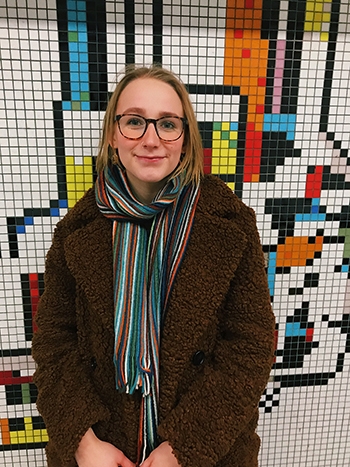
Alli Beck
Alli Beck, senior theatre major from Nacogdoches, and Dustin Barnes, senior theatre major from Needville, are in London completing their last few courses at Rose Bruford. Beck describes the past few months as “a whirlwind” amid the worldwide COVID-19 crisis.“My studies at Rose Bruford are continuing, but they are the least of my worries during all of this,” she said. “It’s been really hard to motivate myself to be invested in the modules left to finish in the midst of this uncertainty.”
Barnes describes these past few months as “lonely, more than anything.”

Dustin Barnes
“It’s hard to go from going to the college every day and being able to see friends, to rarely seeing, let alone interacting with, another person,” he said. “Most days I can keep myself busy by finding online resources that help me continue to learn about things I’m interested in. But some days, I just lie in bed and watch Netflix or Disney Plus.”
The United Kingdom government began its lockdown on March 23, but due to Barnes’ own health conditions, his doctors had already told him to stay home the week before.
“So I’ve been at home for about eight weeks now,” he said. “This fell in line with Rose Bruford’s Easter break, so, luckily, the faculty and staff here had about a month to prepare and make the switch to online where possible.”
From about December to February, Beck was on break and free from classes. In February, her coursework sent her to the Academy of Performing Arts in Prague to do an Erasmus (EuRopean Community Action Scheme for the Mobility of University Students) program and study at DAMU (Academy of Performing Arts) until May. But after only a month of being there, the pandemic forced her to return to England.
“My roommates in London all went back home and I was left alone, so a friend is letting me live with them and their family for the remainder of my stay,” she said. “I’m currently still finishing an Erasmus Project from Prague as well as starting a design module at Rose Bruford. During this time, I’ve had the opportunity to spend my time learning more about my personal interests when I’m not ‘in class.’”
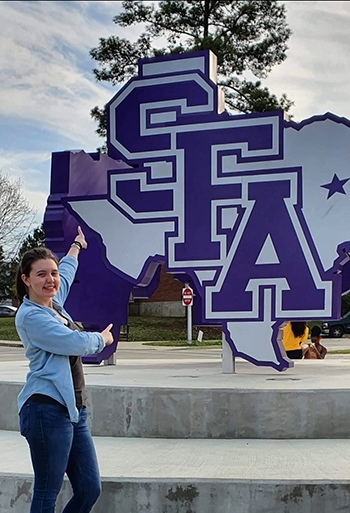
Ruth Sanders
Rose Bruford theatre student Ruth Saunders, who had begun her studies at SFA only in January, returned home immediately following spring break as a result of the pandemic. Arriving in Texas on Jan. 6, Saunders said she met “amazing people” who helped her move in and navigate the campus. In the two months that followed, she enjoyed exploring a new culture, meeting new people and taking theatre courses at SFA.
“We got to midterms, and I was so excited to continue the semester while looking forward to spring break,” Saunders said. “I went away on a trip to Eagle Rock Loop and enjoyed every minute.”
Then, everything changed.
“My 21st birthday was the 15th of March, and then I was on a plane home on the 16th of March,” she said. “While a complete shock, I was so thankful to my friends who helped me to get packed up and were so understanding. After a week or so, I figured out how best to work from the U.K. while juggling work from Bruford, too.”
Beck said she’s concerned she won’t be able to return home when she is ready, or that something will happen to her family while she is so far away. She is challenged by “knowing, once I do come back home, it won’t be the same place anymore, and I will no longer be able to enjoy all the things I’ve missed over this year.”
“My greatest fear has been around my flight home,” Barnes said. “The airline I am using is only giving updates about a month in advance for flights, so I won’t get any information on whether or not my flight home will be on schedule for another month or so. At the moment, I’m finishing up my finals at Bruford, and then I plan to fly back home to Texas in July to take online classes for Summer II at SFA so I can have an easier last semester before I graduate in December.”
Upon returning to the U.K. and juggling the demands of online classes, Saunders has found it difficult to stay in contact with her new SFA friends. “Working online was difficult, but that wasn't the hardest thing,” she said. “I was so challenged in not seeing my friends who I had spent the last two months getting to know.” She hopes to return to Texas in the next year or two.
Like most of the world today, Beck isn’t sure what the future holds for her academically and professionally.
“Our directing project, which was supposed to be over at the end of June, is now possibly being pushed into July or August, if we can meet in person by then,” she said. “I’ll either be coming home in June or August based on this decision. Until then, I’ll be spending my days reading, listening to podcasts, exercising and studying.”
Amid all the challenges and uncertainties, the students said there are some valuable lessons to be learned. Saunders said she cherishes the short time she was at SFA, the new friends she met and what she learned about theatre in different parts of the world … “seeing how the same industry can look so similar, yet be different.”
“For me, the most valuable lesson has been to make the most of each day you’re able to go to class, be with friends and family, or even take a trip to the store,” Barnes said, “because you never know when all of that may just go away.”
“I’ve acquired a whole new perspective on society, the government and the lengths – or lack thereof – that humans will go to keep each other safe,” Beck said. “This experience has been one of personal growth.”
May 14, 2020 - The Stephen F. Austin State University Rusche College of Business recently secured a corporate partnership with Mustang Machinery Company, Ltd., a company that sells and rents construction equipment and engines and operates under the name Mustang Cat.
The partnership allows Mustang Cat the opportunity for exclusive access to branding and recruiting possibilities within the College of Business. It also provides students within the college a platform to increase their network while pursuing job and internship opportunities. Details of the partnership include corporate branding, signage, class visits, student prospecting for jobs and internships, and more. Dr. Timothy Bisping, dean of the College of Business, said partnerships like the one with Mustang Cat provide another avenue for students to succeed.
“Partnering with Mustang Cat allows more opportunities for our students to expand their professional skills and explore career options,” Bisping said. “Our goal is to provide a real-world business environment for our students, grow programs, and continue to offer as many opportunities for our students as possible. Corporate partnerships, like the one we have with Mustang Cat, allow us to do this.”
Austin Propes, parts manager of Mustang Cat, feels confident in the partnership.
“Mustang Cat employs many talented alumni from SFA and being involved with the university helps with our ongoing recruiting efforts,” Propes said. “As a family owned local company, supporting a local university like SFA is something Mustang Cat is happy to do and very proud of.”
Mustang Cat joins Hajoca, Kohl’s and Fastenal on the list of College of Business corporate partners. For more information, contact Bisping at (936) 468-3101 or bispingto@sfasu.edu.
May 13, 2020 - A new concentration available through Stephen F. Austin State University’s Master of Education in educational leadership prepares students to become leaders in the field of public-school athletic administration.
Beginning this fall, the James I. Perkins College of Education at SFA is offering an athletic director concentration that provides the needed skills and knowledge to effectively supervise both coaches and student-athletes.
“The Master of Education in educational leadership program at SFA has a rich history of preparing effective and capable school leaders who influence the educational setting and focus on instruction for student success, but the addition of a program specifically for future athletic directors is a new one,” said Dr. Barbara Qualls, director of SFA’s educational leadership program.
“Students are already enrolling in a cohort for this new program,” she added.
Through this 30-hour, completely online program, students can earn an educational leadership master’s degree, develop athletic administration skills and meet many of the requirements for eventual principal certification, all while remaining fully employed.
“In each course, a field-based component connects the university coursework with transformative leadership experiences in the school setting,” Qualls said. “The students complete assigned and creative experiences that directly apply to each course and comply with the Texas core competencies for administrators and Educational Leadership Constituent Council standards.”
Scholarships are available for the program.
For more information, email Qualls at quallsba@sfasu.edu.
May 12, 2020 - COVID-19 has affected people in all aspects of their lives — socially, professionally and, for some, nutritionally. Thankfully, Nacogdoches Helping Other People Eat, the largest food pantry in East Texas, is receiving assistance from many community members in helping feed the hungry during this uncertain time, including Lizette Rojas, a Stephen F. Austin State University social work student and intern.
Following Texas Gov. Greg Abbott’s stay-at-home order and the closure of many businesses, HOPE has seen an 88% increase from this time last year in those asking for food assistance.
“The Nacogdoches community is extremely giving, particularly during times of a crisis,” said Wilma Cordova, SFA professor of social work and member of the HOPE pantry’s board of directors.
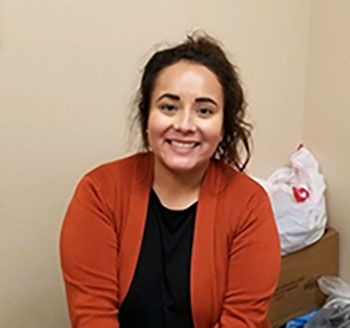
“Many people are in a situation where they need food or may need help in the near future. Social workers adhere to a code of ethics, and Lizette has demonstrated those values by mobilizing a community in a time of need. Her ability to coordinate services and donations has made a difference for the food pantry.”
Although Rojas returned to her home in Fort Worth when SFA’s campus closed in March due to the pandemic, she’s still helping the food pantry and its clients.
“I call clients to ensure they have food to tide them over,” Rojas said. “I also contact area grocers to organize the collection of boxes the pantry uses to package food for distribution. What others may see as simple tasks can be much more. A phone call or cardboard box can make a difference in how many people we can feed in a given week.”
Rojas also mobilizes volunteers to help ensure the pantry is stocked and remains open.
“Lizette’s ability to be extremely organized and create order in a chaotic situation has impressed me throughout this pandemic,” Cordova said. “Nacogdoches is a unique community in that you must be able to network and do it well. Lizette came into an agency that was already well-respected, and she has worked very hard to bring it to a level that is now even more visible and appreciated.
Rojas said she has spent the majority of her internship closely working with individuals and families in need of food or financial assistance. Some of the areas she’s helped to address include working to stop family violence, closing the health-care gap, harnessing technology for social good and ending economic inequality.
“Those who receive services from HOPE come from all walks of life, and their priority is the need for food, but sometimes they need more. Some clients may need referrals to housing, employment, medical or transportation services, and some may just want someone to listen and offer them the motivation to continue along their paths.”
As the pandemic’s effects continue, Rojas said she is determined to stay focused on making a difference — from SFA’s campus or elsewhere. “Although I’m not physically in Nacogdoches, I’m there in spirit,” Rojas said. “It’s important to me to continue my work helping my East Texas community.”
For more information about Nacogdoches HOPE, visit www.nacogdocheshope.com.
May 12, 2020 - Stephen F. Austin State University’s School of Human Sciences is now offering a Bachelor of Science in construction management.
A partnership among SFA’s Arthur Temple College of Forestry and Agriculture, College of Sciences and Mathematics, James I. Perkins College of Education and Rusche College of Business, the construction management program began in fall 2019.
The degree’s courses focus on management and design skills, as well as the knowledge of business, sustainability, building construction and safety codes necessary to succeed in this field. They also prepare students to take the Leadership in Energy and Environmental Design Green Associate exam.
“This degree provides students with a broad-based knowledge of the construction industry combined with a solid general education and extensive training in business management,” said Sally Ann Swearingen, associate professor of construction management and interior design in SFA’s School of Human Sciences. “Students pursuing this degree also examine the regulations, planning, design, theory and methods used in the construction field.”
The 120-hour, four-year degree plan includes a six-hour internship and teaches students how to coordinate and supervise workers, handle unexpected issues and delays, work with customers, and select personnel and subcontractors for specific tasks to meet demanding deadlines.
Students also learn about the construction methods and technologies they need to interpret contracts and technical drawings and discuss them with architects, engineers and building owners. In addition, they study how to write proposals, budgets and plans and how to document progress.
Swearingen said the school is working to make 90% of the degree’s courses available online within two years along with creating on-campus minisessions for labs. SFA also is creating an external board for the program that will include representatives from major construction companies.
Salary estimates for this industry range from $60,000 to $90,000 based on residential to heavy construction.
“The job outlook for this field is good because of the growing population and the new residences, retail outlets, schools and office buildings that go along with that,” Swearingen said. “The need to improve the nation's infrastructure of roads, bridges and sewer pipe systems and to make buildings more energy efficient also makes this a great career choice.”
For more information, contact Swearingen at (936) 468-2048 or sswearingen@sfasu.edu.
May 12, 2020 - The Stanley Center for Speech and Language Disorders at Stephen F. Austin State University will provide speech and/or language teletherapy beginning June 1 for current clients of all ages and anyone receiving services through the school system or other clinics closed due to COVID-19.
It also will offer a limited number of online evaluations for potential clients.
SFA graduate students will provide the clients’ teletherapy with “100% supervision from a licensed speech-language pathologist,” said Deena Petersen, clinic director.
Like other health service providers, the Stanley Center for Speech and Language Disorders has been impacted by the COVID-19 pandemic.
“We hope to open the clinic this summer to provide face-to-face services, but for now all services will be delivered via teletherapy,” Petersen said.
The clinic’s annual summer literacy camp will be offered during SFA’s Summer 1 session through teletherapy. This camp focuses on literacy instruction through small groups and is available to children who will be entering kindergarten this fall or who are in first or second grade and struggling with reading.
“It will be teletherapy that focuses on letters, letter sounds and decoding words,” Petersen said. “A limited number of groups will be available.”
The clinic also is offering speech therapy to those with Parkinson’s disease at no charge via teletherapy.
For more information about these teletherapy services and limited online evaluations, call (936) 468-7109.
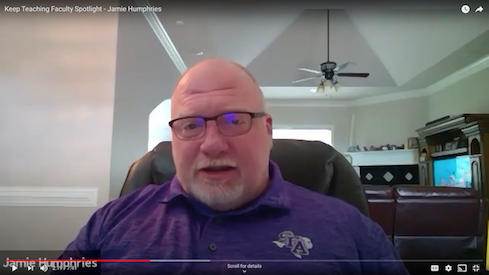
Dr. Jamie Humphries, associate professor in the Stephen F. Austin State University Rusche College of Business, uses data visualization to convert complex data sets into usable business intelligence.
May 11, 2020 - This semester’s special-topics class in a business communication at Stephen F. Austin State University started out as a crash-course in data visualization, with students tracking financial and logistics information as well as the occurrence and location of wildfires, both nationally and in Texas, using Tableau software.
A data junkie who has made a career out of turning opaque statistics into usable business intelligence, Dr. Jamie Humphries, associate professor in the Rusche College of Business, is at his best when tracking something big, something arcane that can be polished, packaged and brought to the conference-room table.
So, it was no surprise that when COVID-19 emerged as an all-consuming pandemic generating a global avalanche of data, that Humphries would realize the opportunity for his students. Quickly plugging into the public Johns Hopkins University database, continually updated with correlated data from 30 global sources, Humphries asked his students to create custom, interactive COVID-19 dashboards.
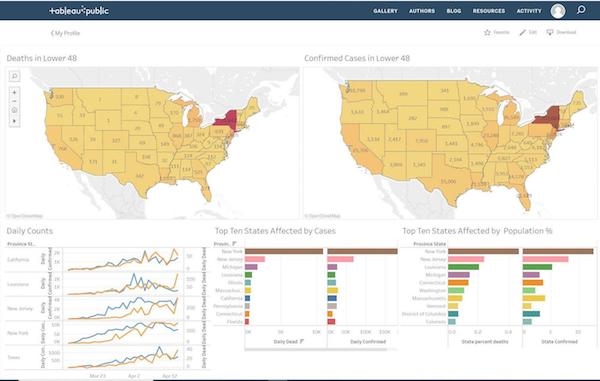
Under the guidance of Dr. Jamie Humphries, associate professor in the Stephen F. Austin State University Rusche College of Business, students created interactive dashboards to track and interpret COVID-19 data.
Once the basics were in place, students were asked to be inventive, to start benchmarking and tracking adjacent data like Wall Street trading to see which stocks crash and those that sizzle during a pandemic, fever charts for hotel stays and, of course, the virus’ curve and its associated death and infection rates. The more granular the better.
Though the COVID-19 project was not on the syllabus at the beginning of the semester, it’s going to be a graded assignment. And it’s also providing a golden opportunity for students to experience what it’s like in the private sector post-graduation.
“You have to pivot,” Humphries said. “You have to find something new.”
Creating customized dashboards to track a virus the size of COVID-19 has been great for the three business and two forestry students enrolled in this semester’s class. By the time it’s over, they should be qualified to take the Tableau software exam for desktop specialist and be halfway through their preparation to qualify as a certified associate, both sought-after credentials in multiple disciplines.
Humphries, in only his second semester at SFA, said the COVID-19 project has tapped into the best impulses of his students.
“These students are a lot smarter than what we give them credit for, and they can be creative,” Humphries said. “You don’t have to ask them to do it. They just do it.”
Once COVID-19 transitions into recovery and the data becomes historical, Humphries said it will still have a great deal of value for students learning the foundations of data visualization. He plans on returning to the pandemic issue, and introducing new topics, this fall.
Regardless of the topic – pandemic, the stock market, wildfires or the opioid crisis – the goal of data visualization is always the same.
“Take data and turn it into a story,” Humphries said. “No one wants to look at a spreadsheet.”
To see Humphries discuss his COVID-19 tracking process with business students, visit bit.ly/2Ll697W.
By Richard Massey, marketing communications specialist at Stephen F. Austin State University.
Pages